

News
If fuel taxes fade, what comes next? A conversation on RUC
If we no longer pay per liter of fuel, should we instead pay per mile we actually drive? A conversation on Road User Charging with Ola Martin Lykkja, RUC lead in Q-Free.
Ola Martin Lykkja has, for the past 8 years, led Q-Free’s work in driving forward Road User Charging (RUC). In recent years, interest has increased significantly, with more countries worldwide, including UK, Ireland, Iceland, Denmark, New Zealand and Norway, now actively exploring RUC as a secure and sustainable model for road funding. We sat down with Ola Martin to discuss the factors driving the increasing interest in RUC, and where the Q-Free solution stands today.
Let’s start with the basics. You get in your car on a typical day, commuting to work, stopping at the supermarket, driving the kids to sports. Why is this everyday travel becoming a major policy issue across the globe?
In short, the vehicle fleet is changing. More and more cars are electric or part of new mobility and ownership models that differ from traditional car ownership.
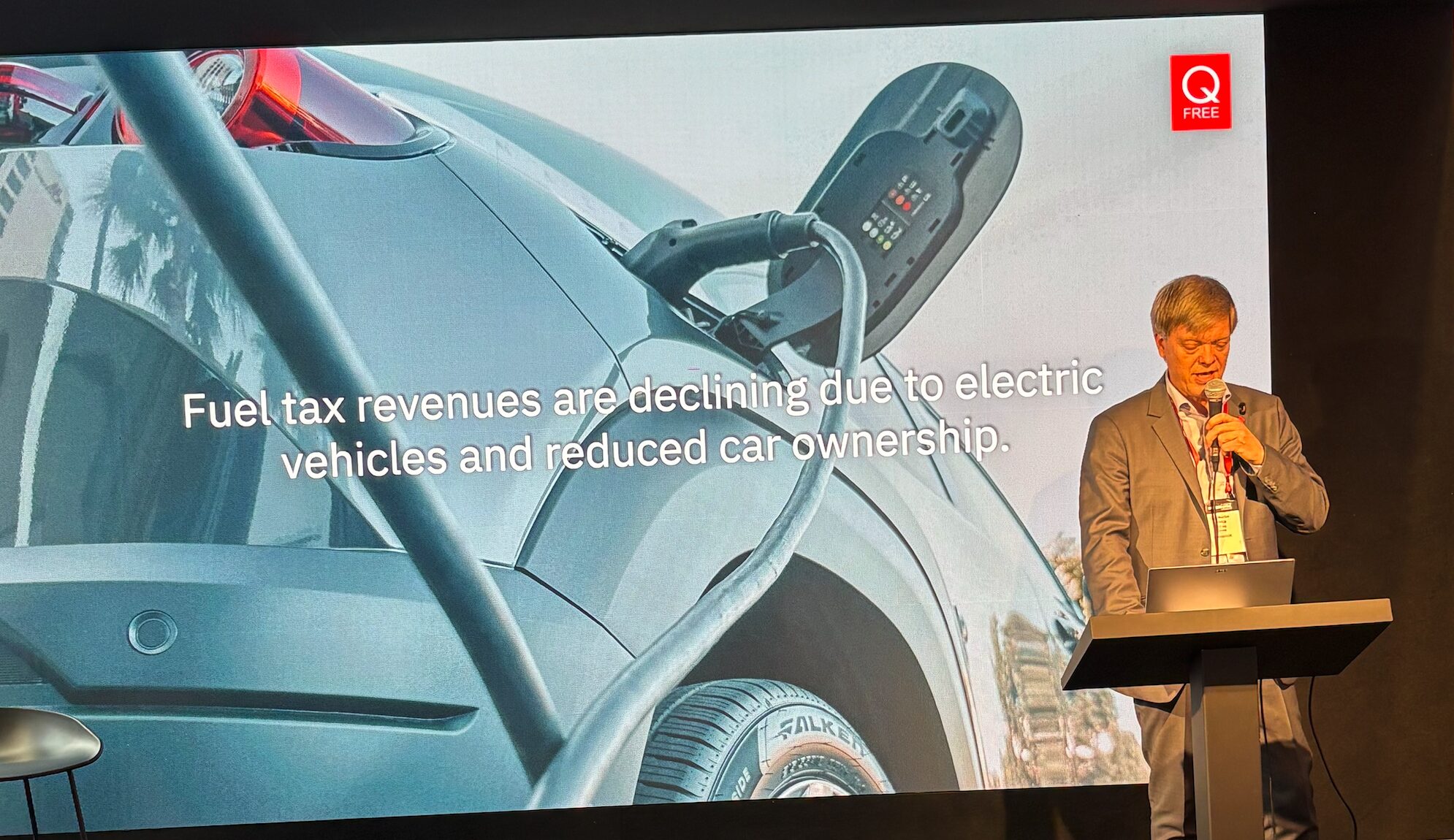
Funding for road construction and maintenance has historically come from fuel taxes and tolls. But with more efficient engines, the rapid rise of electric vehicles, and changing mobility patterns, fuel tax revenues are declining – while road usage and maintenance needs remain the same or are increasing.
This creates a clear funding gap that needs to be addressed.
So the core problem governments and road owners are trying to solve is funding?
Yes, fundamentally that is correct. Roads still need to be maintained, expanded, and managed, but a key revenue source is shrinking. That leads to a simple but important question: ”If we no longer pay per liter of fuel, should we instead pay per mile we actually drive?”
And that’s where Road User Charging comes in?
Exactly. Road User Charging shifts the model from taxing fuel to charging based on actual road use. That includes how far you drive, when you drive – if it’s peak versus off-peak, and where you drive, if it is in urban congestion zones, motorways, or on rural roads.
That sounds like a major shift. How does it change the way we think about roads?
It reframes roads as a service, almost like electricity or water. Users pay in proportion to the costs they create, including congestion, road wear, and environmental impacts.
So modern EV fleets need to be included in the scheme to a larger extent?
Yes. While it is important to incentivize the adoption of electric vehicles, once they make up a significant and established part of the vehicle fleet, they also need to contribute to road funding. As fleets electrify, they no longer contribute fuel tax, yet they still use roads, often at lower per-kilometer costs. Without RUC, we risk increased travel demand, more congestion, and a growing gap in how infrastructure is funded.
So, it’s not just about revenue, but also behavior?
Exactly. It’s about fairness and sustainability. If road use is effectively “free” at the point of travel, we risk overuse. RUC helps align cost with impact, encouraging more efficient travel choices.
In addition, demand for data security, convenience, and flexibility is increasing, and RUC is designed with these evolving expectations in mind.
Where is this idea heading next?
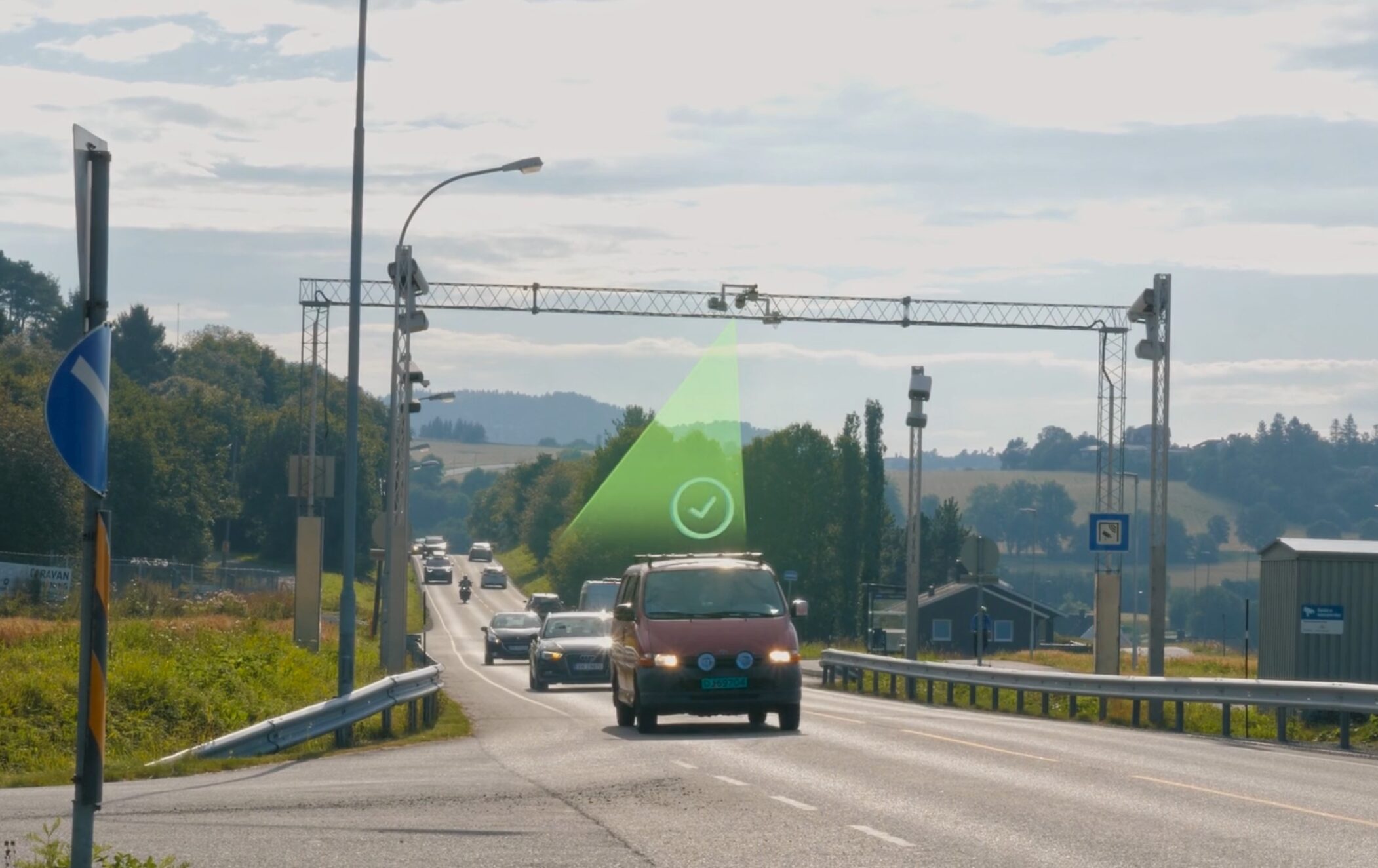
Since 2018, we have developed our RUC system, which is now being piloted in various phases. It is designed to work alongside existing tax and toll systems in the short term, and over time evolve into a modern, usage-based system at scale, as it is designed for.
What do you mean by “designed for scalability and privacy”?
RUC has already been proven in heavy vehicle applications across many markets. However, the existing solutions rely on large, wired devices that require third-party installation.
Our solution is designed specifically for passenger vehicles and fleet scalability. It enables easy installation, long battery life, and is built with data security and privacy at its core. All details about your driving, like where and when, do not leave the vehicle, meaning only data about your total kilometers is transmitted to the central systems. This design follows the principles of the GDPR regulation about purpose limitation and data minimization, and the aspects are critical to scaling RUC in private vehicle markets worldwide. In our opinion, this level of privacy is hard to achieve with e.g. smartphone based RUC.

So what are your next steps on the journey?
We are currently in dialogue with road owners and governments at various levels across the world who are interested in piloting RUC in their own contexts. We will also conduct larger-scale pilots with municipalities in Norway this year.
Momentum is building for several reasons: In some cases, public-private partnerships mean private concessionaires operate roads in early phases, while governments later seek new funding models. In others, rising EV adoption is changing revenue structures, and in growing cities, infrastructure cannot always expand at the same pace as demand, making better demand management essential.
We are proud to be early movers in providing a viable solution to these evolving concerns.